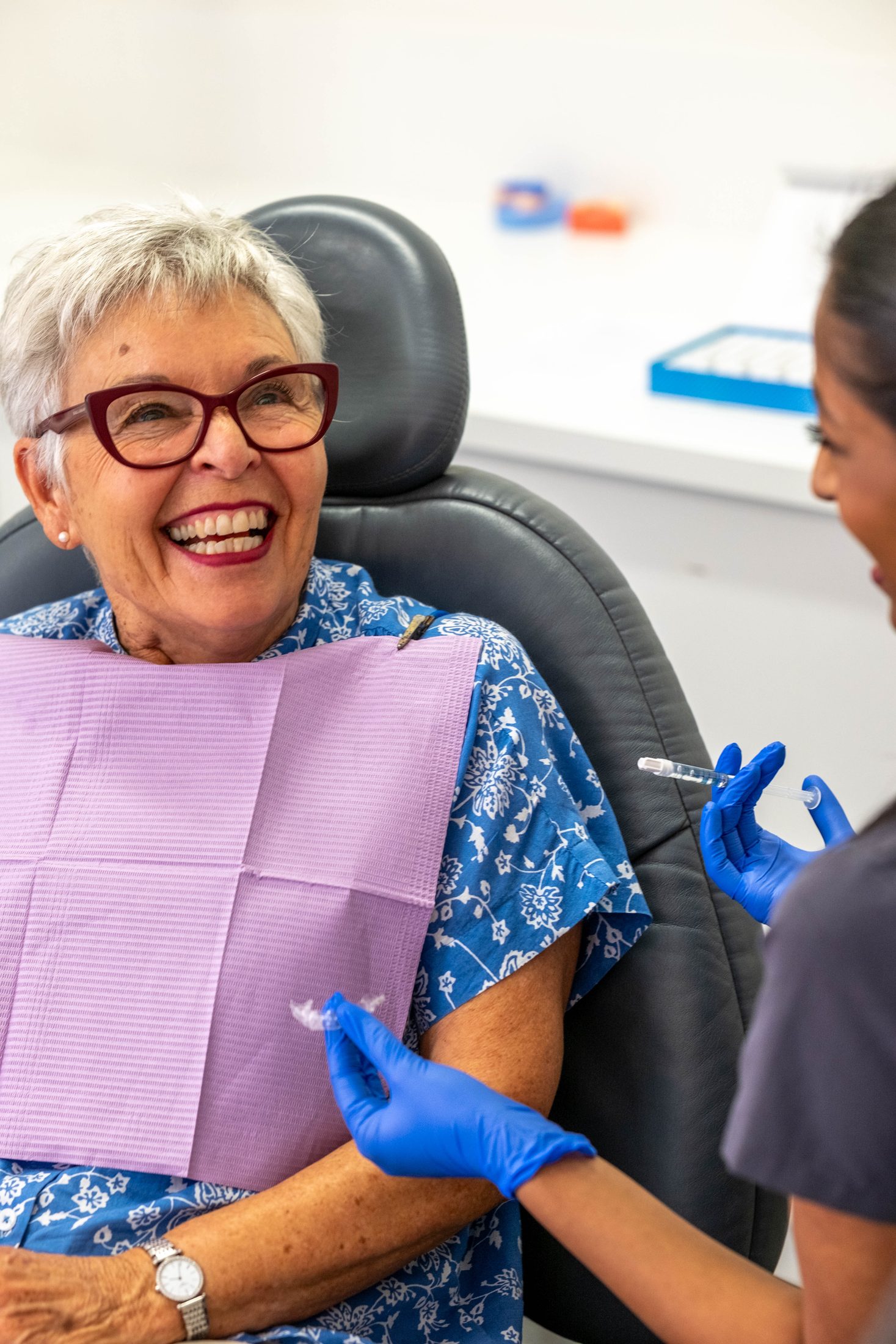
Professional teeth whitening at Chapman Road Dental Clinic starts with a dentist-led assessment, because stains, sensitivity, restorations and enamel health all change the right plan.
Dentist assessedIn-chair or take-homeSensitivity discussed firstNatural teeth only
Shade assessment first Whitening suitability and options discussion
Whitening is often the quiet first step. Not a new smile, not a major plan - just the question that has been sitting there when you see a photo of yourself: could this be a little brighter?
The answer depends on more than shade. Surface stain from coffee, tea, red wine or tobacco behaves differently from internal discolouration. Old fillings, crowns, veneers and bonding do not whiten the way natural enamel does. Sensitive teeth need a gentler conversation. Gum health matters too.
That is why the page is built around assessment rather than promises. Dr Jignesh Vania (Dentist) checks what is causing the colour, whether whitening is suitable, whether a clean should happen first, and whether in-chair whitening or take-home trays make more sense for the way you live.
For Geraldton patients who are weighing whitening against veneers, Invisalign or a broader smile makeover plan, whitening can also be the sequencing step that sets the shade before anything restorative or cosmetic is matched.
How whitening workswhen the starting shade is assessed first
Professional whitening is not a paint layer. The gel acts on stains within natural tooth structure, so the right starting point is a dental assessment, not a shade promise.
A shade and oral-health check
Who checks your shadebefore whitening starts at Chapman Road
Your whitening plan is assessed by Dr Jignesh Vania (Dentist), with the same calm, practical approach used across the clinic.
Dentist
Dr Jignesh Vania (Dentist)
Whitening looks simple from the outside, but the clinical judgement sits in the details: why the tooth is darker, whether old restorations will stand out, whether sensitivity is likely, and whether another step should happen first. Dr Jignesh Vania (Dentist) uses that assessment to make whitening a considered plan rather than a cosmetic shortcut.
For some patients, the answer is straightforward in-chair whitening. For others, take-home trays make more sense. Sometimes the honest answer is to clean first, stabilise gum health, replace a mismatched filling later, or discuss veneers if the colour concern is inside the tooth rather than on the surface.
If whitening is not the right next step, you will be told before you spend money on it.
Registration: AHPRA registered Dentist
Cosmetic planning: Whitening, veneers, Invisalign and staged smile planning
Assessment includes: Shade, restorations, sensitivity and oral-health check
Next step: Written recommendation and fee before treatment proceeds
AHPRA Reg. No. DEN0002032608
For complex cases we refer out when it matters. If discolouration needs restorative, endodontic or specialist input before whitening is sensible, Dr Jignesh Vania (Dentist) will tell you at the assessment.
What happens nextfrom shade check to aftercare
The exact sequence depends on whether in-chair whitening, take-home whitening, or a staged cosmetic plan is the right fit.
01 · Assessment visit
The goal is not to promise a number of shades. It is to work out whether whitening is the right way to answer your concern.
Step 01 · Suitability
Shade check, dental assessment and expectations
Before whitening starts, the dentist checks why the teeth are darker and what may limit the result.
Dr Jignesh Vania (Dentist) reviews your teeth, gums, existing restorations, sensitivity history and the shade you are hoping for. If a clean, filling review or gum treatment should happen first, that becomes part of the plan rather than an afterthought.
Current shade and colour concern discussed
Restorations checked for visible mismatch risk
Sensitivity and gum recession discussed
Treatment fee confirmed before proceeding
02 · If needed
If the colour problem is partly surface stain, a professional clean may change the conversation before whitening starts.
Step 02 · Preparation
Clean first, or stabilise what needs attention
Sometimes whitening is not the first appointment.
Surface stain and calculus can mask the real starting shade. If you are due for a check-up and clean, or if gum inflammation, decay or a leaking restoration needs attention, that may be handled before whitening begins.
Check-up and clean recommended when clinically useful
Decay or gum disease treated before cosmetic work
Existing restorations noted before shade change
Plan sequenced around your actual mouth
03 · In-chair option
In-chair whitening is convenient, but it still needs assessment first. Not every darker tooth is a whitening case.
Step 03 · Clinic whitening
In-chair whitening with soft-tissue protection
For patients who want a clinic-led appointment, in-chair whitening keeps the process supervised.
The whitening product is applied with soft-tissue protection and the appointment is monitored by the dental team. This option suits patients who prefer to have the main whitening session completed in the clinic rather than managing trays at home.
Soft tissues protected during application
Sensitivity checked during and after treatment
Shade reviewed at completion
Home-care instructions provided
04 · Take-home option
Take-home whitening is still professional treatment. The important part is correct product, tray fit and instructions.
Step 04 · Tray whitening
Take-home trays for a steadier pace
Some patients prefer custom trays and a slower whitening rhythm.
Custom trays can let whitening happen gradually at home, with instructions on gel use and what to do if sensitivity appears. This may suit patients who want more control over timing, or who want to avoid a longer in-chair session.
Custom tray fit checked
Gel use explained clearly
Sensitivity plan discussed
Review pathway set if you need advice
05 · Aftercare
If you are planning veneers, bonding or a smile makeover, whitening usually needs to happen before final shade matching.
Step 05 · Maintenance
Review, shade stability and future dental work
Whitening does not stop normal dental maintenance.
After whitening, the team explains how to manage sensitivity, how staining habits affect maintenance, and how to sequence any later fillings, bonding or veneers so the shade match is not set too early.
Sensitivity and gum comfort reviewed
Maintenance habits discussed
Restoration shade timing explained
Regular check-ups continue as normal
Is whitening suitable?the cases where we slow down first
Whitening can be a good fit, but not every colour concern is a whitening problem. Suitability is checked before treatment.
Whitening may suit you when
Your concern is natural tooth shade or surface staining
Your teeth are generally healthy and the colour concern is mainly natural enamel shade
Surface staining from coffee, tea, red wine or tobacco is part of the issue
You want to lighten your teeth before veneers, bonding or other shade-matched work
You understand crowns, veneers, fillings and bonding will not whiten like natural enamel
You are comfortable with a result that varies from person to person
The assessment is there to match the option to your mouth, not to talk every patient into whitening.
Whitening may wait when
Another dental issue needs attention before colour
You have untreated decay, gum disease or a cracked tooth that needs care first
Sensitivity, recession or enamel wear would make whitening uncomfortable without planning
The darker tooth has internal discolouration that may need a different discussion
Visible crowns, veneers, fillings or bonding would become mismatched after whitening
You are looking for a fixed shade change or an exact cosmetic result
If whitening is not the right first step, Dr Jignesh Vania (Dentist) will explain the safer sequence and the alternatives.
In-chair or take-homethe option depends on pace, sensitivity and fit
Both pathways need a dentist-led assessment first. The difference is how the whitening is delivered and how much of the process happens at home.
Clinic-led
In-chair whitening
A clinic appointment with soft-tissue protection, whitening product applied under dental team supervision, and aftercare instructions before you leave. This fits patients who want the main session handled at the practice.
Written estimate
Home rhythm
Take-home whitening trays
Custom trays and professional gel with clear instructions. This fits patients who prefer a steadier pace, want to manage whitening around work or family life, or need a more cautious sensitivity plan.
Quote at assessment
Sequenced care
Whitening before other cosmetic work
If you are considering veneers, bonding, Invisalign or a smile makeover, whitening may happen before final shade selection so future dental work is matched to the shade you intend to keep.
Plan first
What whitening costsand what changes the final quote
The advertised from-price is a guide. The actual plan depends on assessment, option type, tray needs and whether other care should happen first.
Whitening fee guide
Professional whiteningAssessment-led plan; in-chair or take-home pathway confirmed at the clinic
$499 from
Check-up and clean firstRecommended when surface stain, calculus or oral-health checks should be handled first
Quoted before treatment
Health funds vary by policy
Cosmetic whitening may receive limited or no rebate depending on your extras cover. Bring your health fund card and the team can help you check the practical next step.
Payment timing is discussed before care
You will know the fee before treatment proceeds. If take-home trays, review visits or a clean are part of the plan, those are explained before you commit.
No fixed shade promise
Whitening response varies between patients. The clinic can assess suitability, explain limits and reduce avoidable risks, but it cannot promise an exact final shade.
Final fees depend on the whitening pathway, tray requirements, review needs and whether other dental care should happen first. Your written fee is confirmed before treatment proceeds.
Ready to ask the shade question?
Book a whitening assessment in Geraldton
A whitening assessment gives you the practical answer: whether whitening fits, which option makes sense, what it costs, and whether anything should happen first. If you are comparing whitening with veneers, Invisalign or a staged smile makeover, the assessment also helps set the right order. Book online or call Chapman Road Dental Clinic on 08 9964 3577.
The honest versionwhitening has limits worth knowing first
This is the part that keeps the page AHPRA-safe and useful: what whitening can do, what it cannot do, and what may need another plan.
Before you decide
Whitening lightens natural tooth shade.
It does not repair teeth, move teeth, replace a clean, or change the shade of ceramic and composite restorations. The assessment matters because those limits affect whether whitening will actually answer the concern you walked in with.
Existing dental work does not whiten the same way
Crowns, veneers, fillings and bonding usually stay the same colour. If they sit in the smile line, whitening surrounding natural teeth can make the mismatch more visible.
Sensitivity can happen
Whitening can cause temporary sensitivity or soft-tissue irritation. A history of sensitive teeth, gum recession or enamel wear does not automatically rule whitening out, but it does change the plan.
Some stains need another conversation
Internal discolouration, trauma-related darkening, medication-related staining or old restoration shade mismatch may not respond in the way surface staining does. In those cases, the right answer might be restorative or cosmetic planning rather than more whitening.
The final shade cannot be promised
People respond differently. Starting shade, stain type, enamel characteristics and habits all affect the result. The clinic can assess and guide; it cannot promise a fixed shade outcome.
Maintenance still matters
Coffee, tea, red wine, tobacco and oral-hygiene habits affect how long the shade feels fresh. Regular check-ups and cleans remain part of maintaining the result.
Shade conversationswithout outcome photography or promises
For whitening, the useful record is not a dramatic image pair. It is the starting shade, the reason for discolouration, the pathway chosen and the limits discussed.
Clinical notes
How whitening decisions are documented
The whitening record should note the starting shade, visible restorations, sensitivity history, option selected, and aftercare instructions. That gives the patient and dentist a clear reference if future bonding, veneers or crowns are planned.
This page deliberately avoids public clinical-result imagery and transformation-style claims. The aim is to help patients understand the decision, not to imply that one person's result predicts another person's outcome.
What belongs in the record
Starting shade and colour concern
Existing restorations noted
Sensitivity history discussed
Whitening option and instructions
Future shade-matched work flagged
Frequently askedabout teeth whitening.
Yes. A dental check before whitening is the difference between "I want whiter teeth" and "what is actually causing this shade?" Surface staining, natural enamel colour, old fillings, trauma-related darkening, gum recession and internal discolouration can all look similar to a patient in the mirror.
Healthdirect Australia advises speaking with a dental practitioner before whitening, particularly because whitening may not be suitable for every mouth and can have side effects such as sensitivity or gum irritation.
At Chapman Road Dental Clinic, the assessment also checks whether you are due for a check-up and clean first, whether any visible restorations could mismatch after whitening, and whether in-chair or take-home whitening is the better fit.
Start with the shade questionand leave with the sensible next step.
Book a whitening assessment with Dr Jignesh Vania (Dentist). You will find out whether whitening fits, which option is appropriate, what it costs, and whether a clean, restoration review or broader cosmetic plan should happen first. Patients from Geraldton, Wonthella, Rangeway, Spalding, Beachlands and Drummond Cove are welcome. Book online or call 08 9964 3577.